
Knowledge hub.
Guides, technical explainers and buying advice from the engineers behind Carimali, Elektra, Heylo and Bellezza.
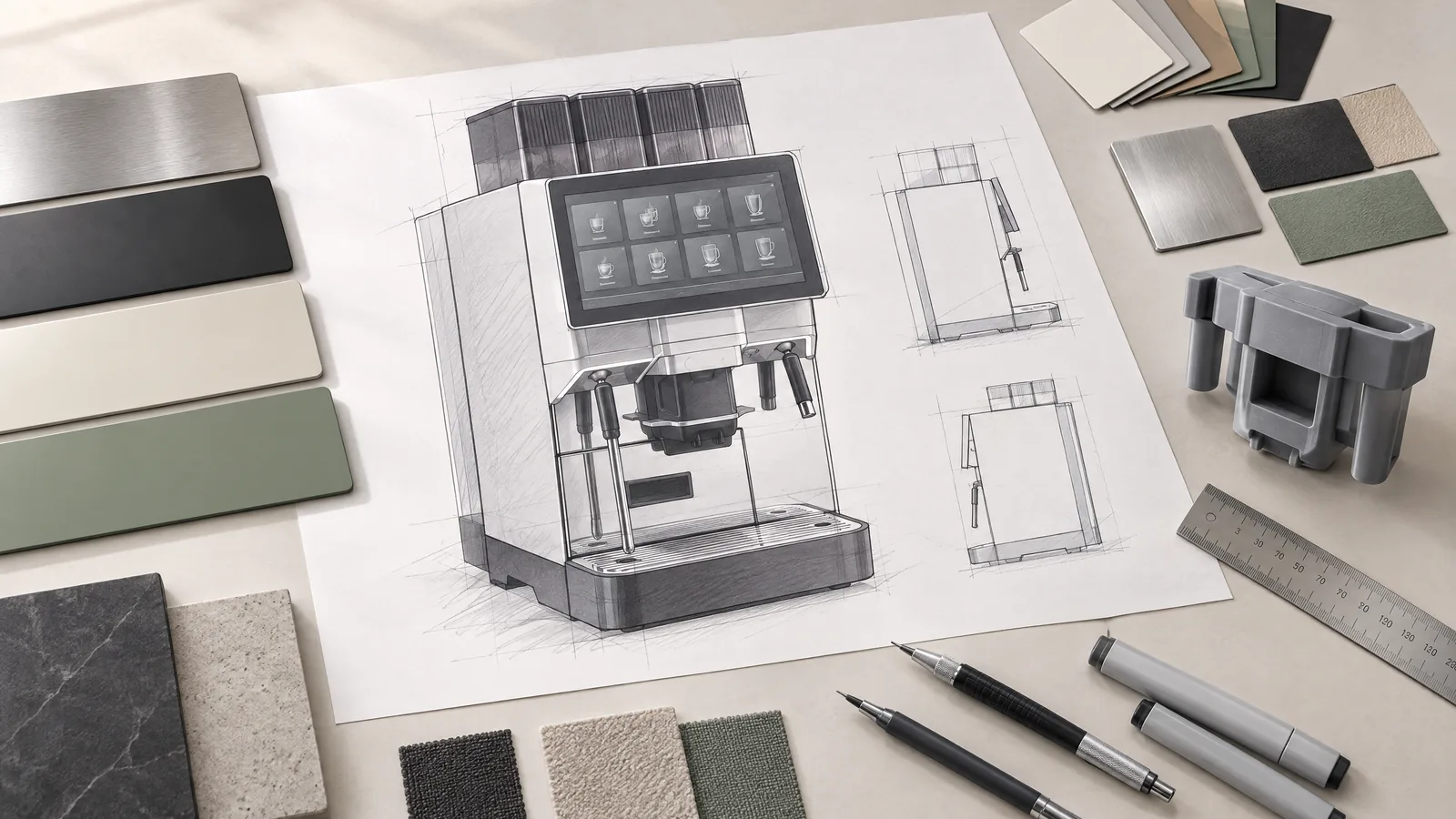
Is OEM right for your coffee-machine brand? Volumes, certification and timelines
An OEM programme works when you have a defined market, real annual volume, a certification plan for every country you will sell in and someone to service the machines. It is the wrong route to a cheap machine in a hurry. This is how to tell which side of that line your project sits on.
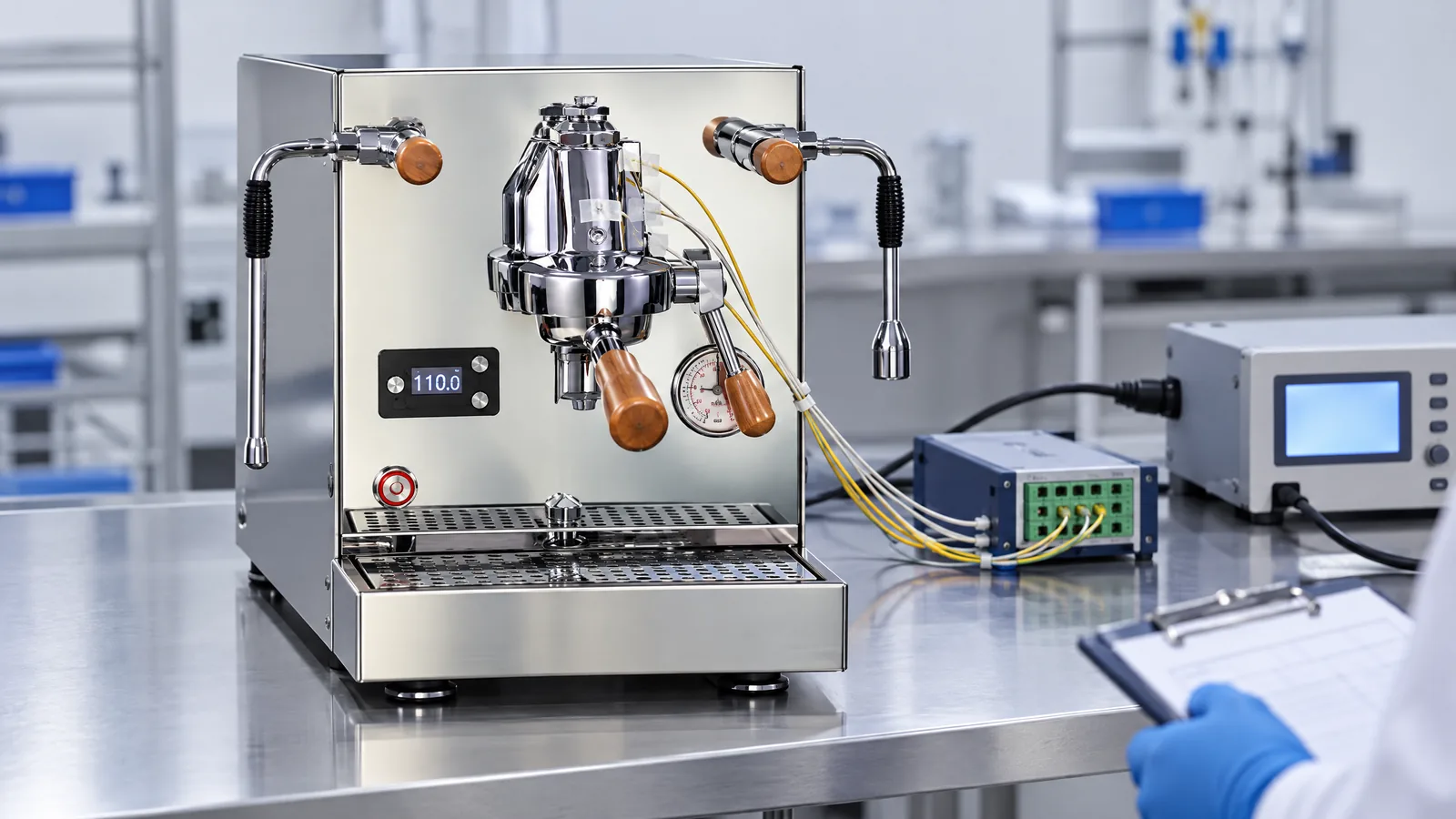
Selling an espresso machine in the US: NSF, UL and ETL certification explained
A commercial espresso machine sold in the United States needs electrical safety certification from a recognised testing laboratory and, for food service, sanitation certification that health inspectors accept. A European CE-marked machine meets neither by default, which is why North American versions are usually separate models.
How many cups a day? Matching the machine to the site
The number of drinks you make on a normal day, and in your busiest hour, decides which kind of machine makes sense, and whether a professional machine makes sense at all. Below a handful of coffees a day, the daily care a professional machine needs outweighs what it gives back.
Decaf grows up
Decaf used to be bad for two separate reasons — the processes damaged the coffee, and nobody sent good coffee to be decaffeinated. Both have changed, and the second mattered more. This sets out how the processes work, why decaf beans behave differently at the bar, and why a good one extends the trading day.
Why high-altitude coffee tastes different
Altitude does not flavour coffee directly. It cools the air and widens the gap between day and night temperature, which slows the ripening of the cherry, which changes the seed inside it — and the denser seed that results roasts, grinds and extracts differently. The honest version of the claim is that slower maturation tastes different, with altitude as its most common cause.
Common barista mistakes — and how to fix them
A diagnostic guide to the mistakes that most often cost a bar quality, organised as mistake, what it does, how to tell, and the fix. Almost none of them requires new equipment; most of them cost nothing but attention and a routine somebody owns.
Freezing coffee: what the evidence says
Freezing roasted coffee slows every mechanism that stales it, and the long-standing objection to the practice was never really about cold — it was about condensation. The case is strong for portioned whole bean, interesting for grinding from frozen, weak for pre-ground, and genuinely unsettled for green.
How long roasted coffee actually stays good
The date printed on a coffee bag is a food-safety and labelling date, not a quality window. Quality is governed by three processes running on different clocks — carbon dioxide leaving, oxidation, and moisture uptake — and only one of them starts out working in your favour.
Talking to customers about price increases
How a price increase is communicated changes how it is received, and often changes how much of it you get to keep. This sets out the four framings operators actually use, which of them survive contact with a regular customer, and the timing and staff-briefing mechanics that decide whether the increase lands quietly or becomes an argument.
Espresso channelling: what it is, what causes it, and how much it really matters
Channelling is water finding low-resistance paths through the coffee bed instead of passing through it evenly, so part of the puck is over-extracted while part is barely touched. It is the standard explanation for shots that taste bitter and sour at once — though the evidence on how much moderate channelling actually costs the cup is less settled than the shop-floor consensus suggests.
What makes a coffee shop succeed
Successful coffee shops share a small number of structural traits: a specific reason to exist, costed drinks, regulars rather than passing trade, consistency, one correctly identified constraint, staff who stay, and an operation that runs without the owner present.
Light vs medium roast for espresso
Choosing between light and medium roast for a bar's espresso is a menu and operations decision more than a taste one. Specialty moved decisively toward light roasting for good reasons, and part of the market has since moved partway back for reasons that are just as good.
Why do coffee shops fail? The recurring causes
Coffee shops rarely fail for one dramatic reason. They fail through a small set of recurring mechanisms — undercosting, fixed-cost load, labour, specification errors, no differentiation, cash timing, owner dependence and drifting standards. This sets out how each one actually does its damage.
Arabica and robusta: ending a false dichotomy
Arabica and robusta are genuinely different species with different chemistry, different agronomy and different behaviour in the cup — but the difference is not a hierarchy. Most of the reputation gap between them was built by how robusta has been farmed, processed and roasted, not by what it is.
Puck preparation: distribution, tamping, and why they're not the same problem
Distribution and tamping are routinely treated as one step. They solve different problems — distribution makes the coffee bed uniform across its area, tamping compresses it to a consistent height — and tamping cannot repair bad distribution. It can only compress an uneven bed evenly.
Descaling at home: intervals, products, and mistakes
Descaling is damage control, not maintenance — a machine that needs it often is being fed the wrong water, and every descale is mildly aggressive to the machine. This is how scale forms, how to work out your own interval instead of borrowing someone else's, and how to treat the water so the job largely goes away.
How to choose a wholesale roasting partner
Choosing a roaster is the selection of a long-term operating relationship, not the purchase of a product, and the coffee is the easiest part to judge. This covers consistency and supply security, the support that actually matters, contract structure, and the tied-equipment clause that quietly decides how free you are to leave.
Cold brew and food safety
Cold brew is the only thing a coffee bar makes that never passes through hot water, which turns it from a drink-making step into a food-production activity. This sets out where the hazards come from, where the control points are, and why many cafés are better off not making it at all.
Can a café charge more for cold drinks?
Customers hold a firm idea of what a flat white costs and notice every increase, but they hold no equivalent reference price for a cold foam or an iced latte. That gap is where the pricing room sits, and the large chains have already taught mainstream customers to accept it. This sets out the mechanism, what the cold menu asks of milk equipment, and what to check before adding one.
Flow control on a home machine
A practical guide to using a flow control valve on a home espresso machine — what to do at each phase of the shot, what to watch, how to read the pressure gauge as feedback, and how to tell whether anything you changed actually worked.
Grinder maintenance and calibration schedules for busy sites
The grinder has more influence over the cup than any other device on the bar and receives less maintenance than any of them. A schedule built around daily, weekly, monthly and throughput-based tasks — with a written record of the setting — protects consistency more cheaply than any equipment upgrade.
How burr sharpness changes your grind — and your cup
Burrs fracture beans by shearing them. A sharp edge fractures cleanly; a dull one crushes, producing more fines and a wider particle distribution at the same setting. Because burrs dull gradually rather than failing, the decline is invisible day to day and only obvious when you compare.
The complete guide to espresso extraction variables
Espresso is governed by around ten variables that all interact, which is why changing one thing often appears to change everything. This is a reference to each variable, what it does, how it couples to the others, and a disciplined method for adjusting them one at a time.
Water for coffee: hardness, alkalinity and mineral content explained
Water is almost all of what is in the cup, and two of its properties — hardness and alkalinity — are routinely confused with each other. They are measured separately, they do different things, and understanding the difference is what turns water from a mystery into a variable you can manage.
Is there a perfect brew temperature?
There is no single correct brew temperature, because the right number depends on the coffee, the grind and the ratio you are running with it. The question that matters more is whether your machine actually holds whatever number you chose — a machine steady at 92 °C beats one averaging 94 °C while swinging.
How to clean a home espresso machine properly
Most home espresso machines that taste bad or fail early are not badly made — they are dirty, and dirty in the places nobody looks. This is a practical cleaning routine organised by interval and by machine type, with the parts that matter separated from the parts that only look dirty.
Cold brew methods for cafés, compared
Cold brew is a stock item rather than a drink, so choosing a method is mainly a decision about capital, floor space, lead time and waste risk. This compares immersion, slow drip, nitro, accelerated brewing and flash chilling on what each actually costs a venue to run.
Choosing a water treatment system for a commercial coffee machine
You cannot specify water treatment without first knowing what is in your water, and the default answer — a softener — is frequently the wrong one. This is what each category of treatment actually does, and how to match one to the problem you have.
How to cost and price a cup of coffee properly
A method for building the real cost of a drink from your own figures — coffee, milk, consumables, labour, energy, water, equipment amortisation and waste — and then using it to set prices, edit the menu and see which drinks carry the business.