
Short answer: clean the milk system every day, at the end of service, with the machine's automatic cleaning cycle and a detergent made for milk. Keep the milk cold, at about 4 °C, between drinks. Wipe and purge the steam wand after every use. A quick rinse during the day moves milk out of the line, but it leaves milk proteins behind; only the full cleaning cycle removes them.
On a fully automatic machine the coffee side forgives a lot. The milk side does not. Milk cleaning and the steam wand are also among the questions our service team hears most often from distributors and service centres. This guide sets out the routine that keeps milk drinks consistent and the machine out of trouble.
Why the milk system needs the most care
Milk carries protein, fat and sugar. Heated and left in a tube, valve or frother, it forms a film that hardens over time, changes the taste and texture of the foam, and gives bacteria somewhere to grow. Milk proteins are also allergens, which matters when the same machine serves cow's milk and plant-based drinks to customers who need to avoid dairy.
Coffee residue is different: it is mostly oils and fine grounds, and the brewing unit has its own cleaning products. That difference is why one detergent does not do both jobs.
Keep the milk cold
- Keep milk in a fridge next to the machine, at about 4 °C.
- Fill the container with fresh milk; do not top up milk that has been standing.
- Clean the container itself every day, together with the milk system.
Cold milk also foams better and more consistently, so the fridge helps the drink as much as the hygiene.
The end-of-day cleaning cycle
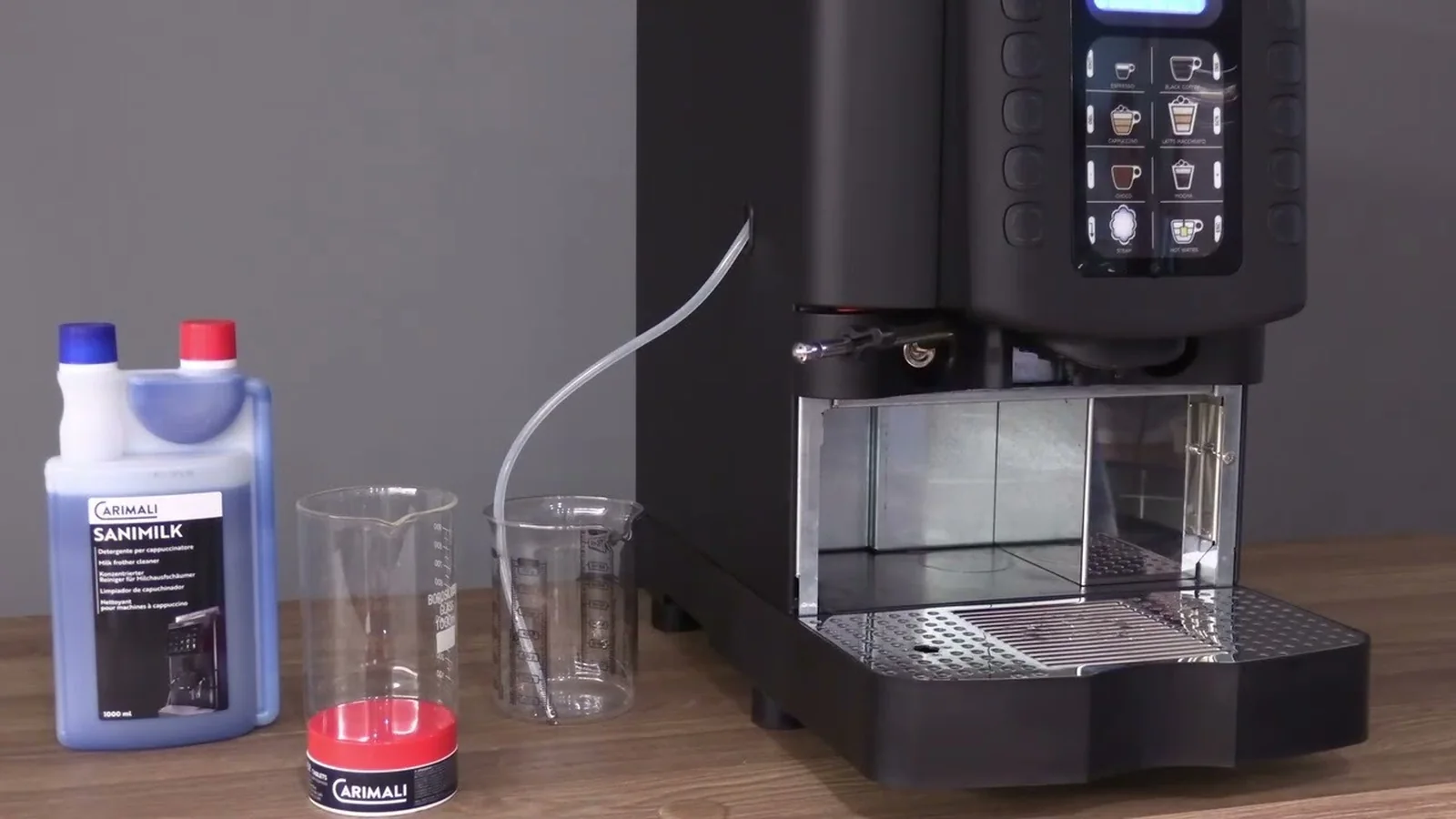
Every fully automatic machine with a milk system has an automatic cleaning programme. Run it every day, after the last drink, and follow the screen instructions. On Carimali fully automatics the programme is called All in One: it cleans the coffee brewing unit and the milk circuit in one cycle, using SANIMILK liquid detergent for the milk line and Carimali cleaning tablets for the brewing unit.
Two points cause most of the problems we see:
- The milk circuit needs its own detergent. A milk-circuit detergent breaks down milk proteins. The tablets or powder for the brewing unit are made for coffee oils and do not remove milk deposits, however often you use them.
- Use the products the manufacturer specifies. The cleaning cycle is designed around them. If you want to switch to another detergent, ask your supplier first.
A rinse is not a cleaning cycle
Most machines also offer a quick rinse, or purge, that pushes water or steam through the milk line between drinks or during quiet moments. It is useful: it stops milk drying in the line and keeps the next drink clean. But a rinse dilutes and flushes; it does not dissolve the protein film. Lactose rinses out easily, milk proteins much less so.
So treat the rinse as housekeeping during service, and the full cycle as the actual cleaning. If you serve customers who must avoid dairy, run a full cleaning cycle before switching the line to a plant-based drink rather than relying on a rinse.
The steam wand
- Wipe the wand with a clean, damp cloth and purge it after every use. Milk dries fast on a hot wand.
- If the wand drips or leaks, do not try to tighten or open it: call a technician.
Parts that come off
Your machine's manual lists the milk parts that come off for manual cleaning, such as tubes, the milk inlet and parts of the frother, and how often to clean them. Some of these parts wear out and are replaced during scheduled service visits; ask your technician what your maintenance plan covers.
Signs the milk system needs attention
- The foam is thinner, coarser or less consistent than usual.
- Milk drinks come out cooler than they should.
- A sour smell, or visible residue in the tubes or container.
Run a full cleaning cycle first. If the problem stays, call a technician: milk temperature and foam settings are adjusted in the recipe, and a technician should make that change.
Keep a record
Most food-safety plans expect a record of equipment cleaning. Write down each daily cycle, or use a connected machine: CARIcare keeps the cleaning history of each machine, so a multi-site operator can check from the office that every site cleaned its machine last night.
Video guides
Our service team has filmed the end-of-day cleaning on three Carimali fully automatics (in Italian):
Frequently asked questions
How often should I clean the milk system? Every day, at the end of service, with the full cleaning cycle. Rinse during the day as well if the machine stands idle between milk drinks.
Can I use the brewing-unit tablets to clean the milk line? No. They are made for coffee residue. The milk line needs a milk-circuit detergent that removes proteins.
At what temperature should milk be kept? At about 4 °C, in a fridge next to the machine.
Do I need to clean before switching to oat or soy drinks? If you serve customers who must avoid dairy, yes: run a full cleaning cycle, not just a rinse.
The steam wand leaks. What do I do? Stop using it and call a technician. Do not open or tighten it yourself.